
Organised every year by Magelis in Angoulême, Immersity is the meeting place for the talents of creative XR: authors, producers, studios, distributors, institutions and researchers come together to share their experiences and projects around virtual reality and immersive works.
The 9th edition took place on 18 and 19 March 2026 and brought together nearly 200 registered participants. It focused on the business models of the immersive sector, with case studies and discussions on the rise of multi-user experiences in physical venues, on funding for creation and on the place of research and development.
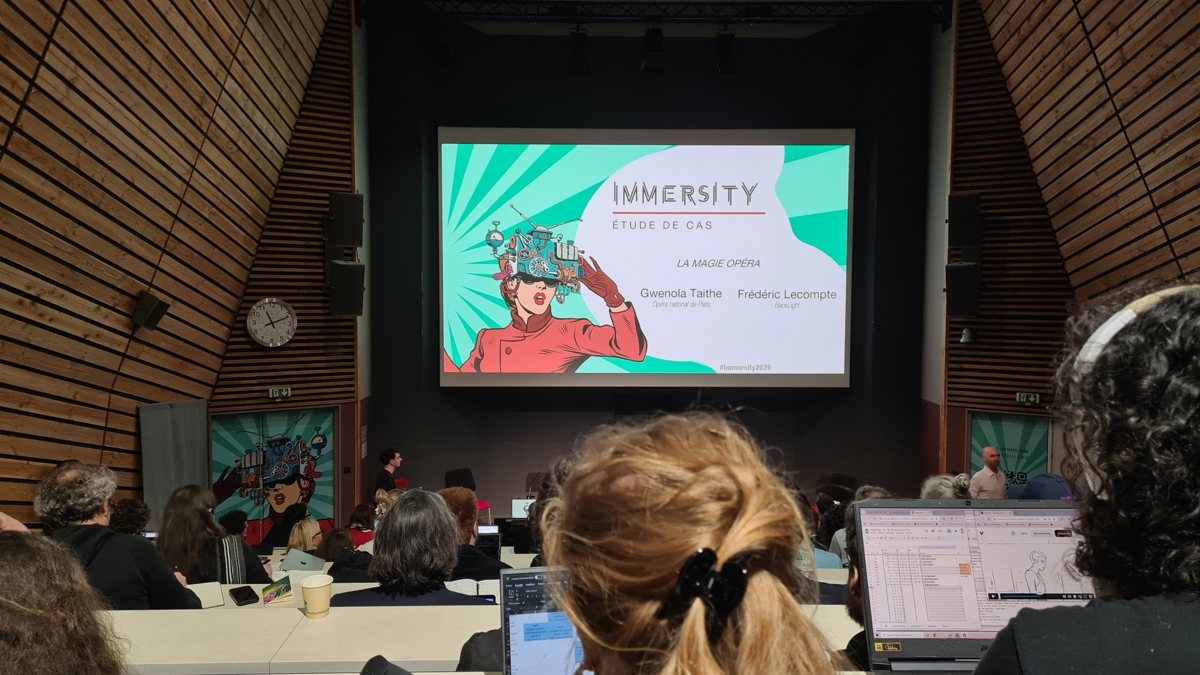
Immersity 2026, Angoulême
With Jean-Michaël Celerier (SAT), Jean-Pierre Gazeau (CNRS) and Xavier Maître (CNRS). Moderator: David Nahon (Dassault Systèmes).
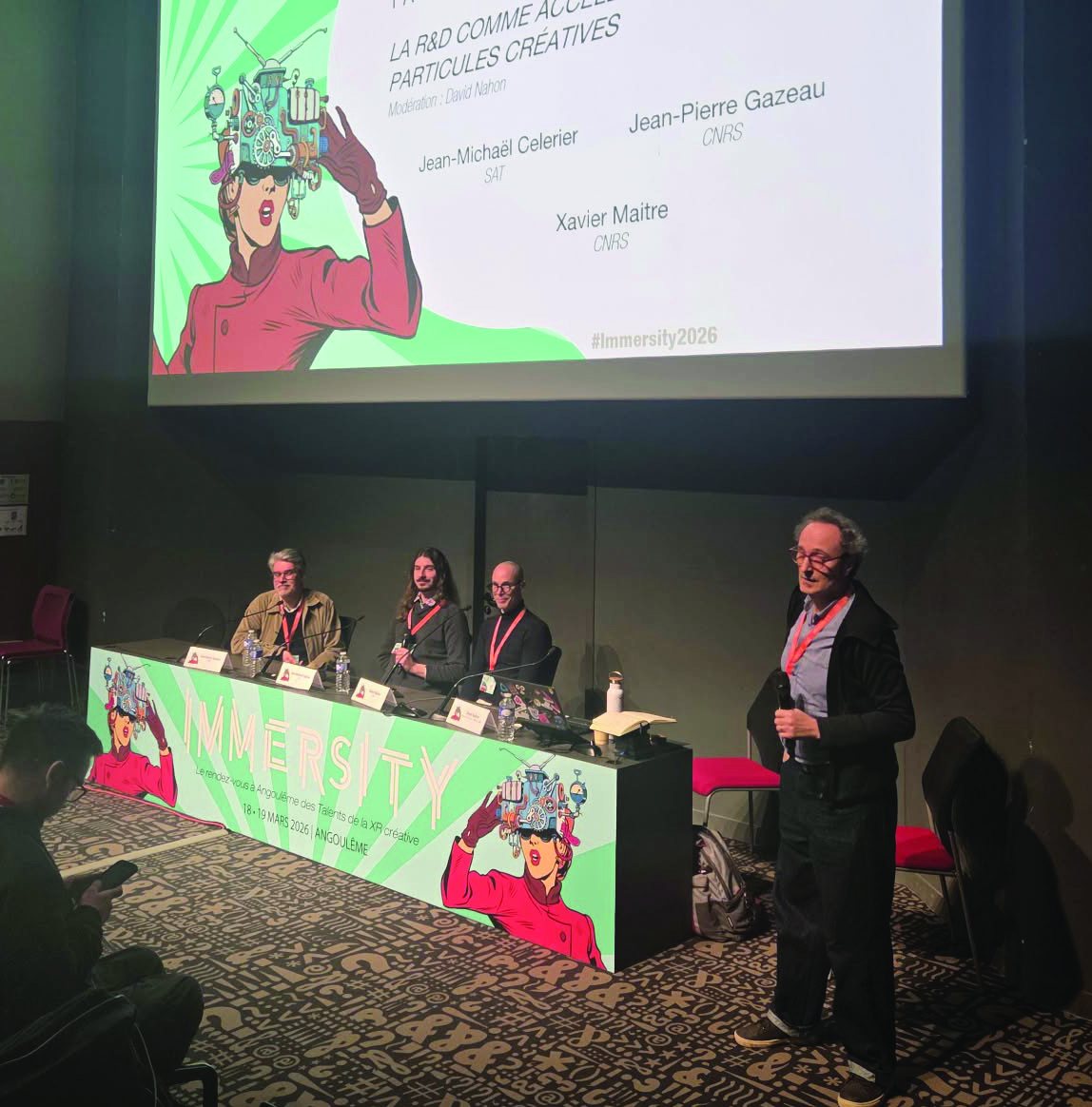
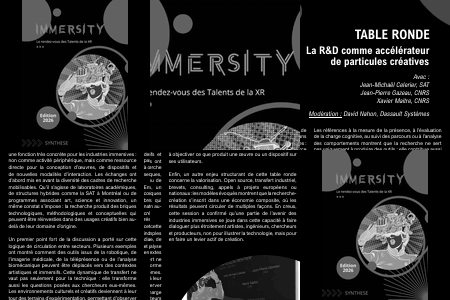
The round table “R&D as an accelerator of creative particles”, Immersity 2026
The round table on R&D as an accelerator of creative particles placed research in a very concrete role for the immersive industries: not as a peripheral activity, but as a direct resource for designing works, devices and new modes of interaction. The discussion first highlighted the diversity of research frameworks that can be drawn upon. Whether academic laboratories, hybrid structures such as the SAT in Montreal or programmes combining art, science and innovation, the same observation holds: research produces technological, methodological and conceptual building blocks that can be reinvested in creative uses far beyond their original field.
A first highlight of the discussion was this circulation between sectors. Several examples showed how tools from robotics, medical imaging, telepresence or biomechanical analysis can be moved into artistic and immersive contexts. This transfer is not only technical: it also changes the questions researchers ask themselves. Cultural and creative environments in turn become testing grounds to observe interaction, perception, presence or cognitive load in complex, multi-user situations open to the public.
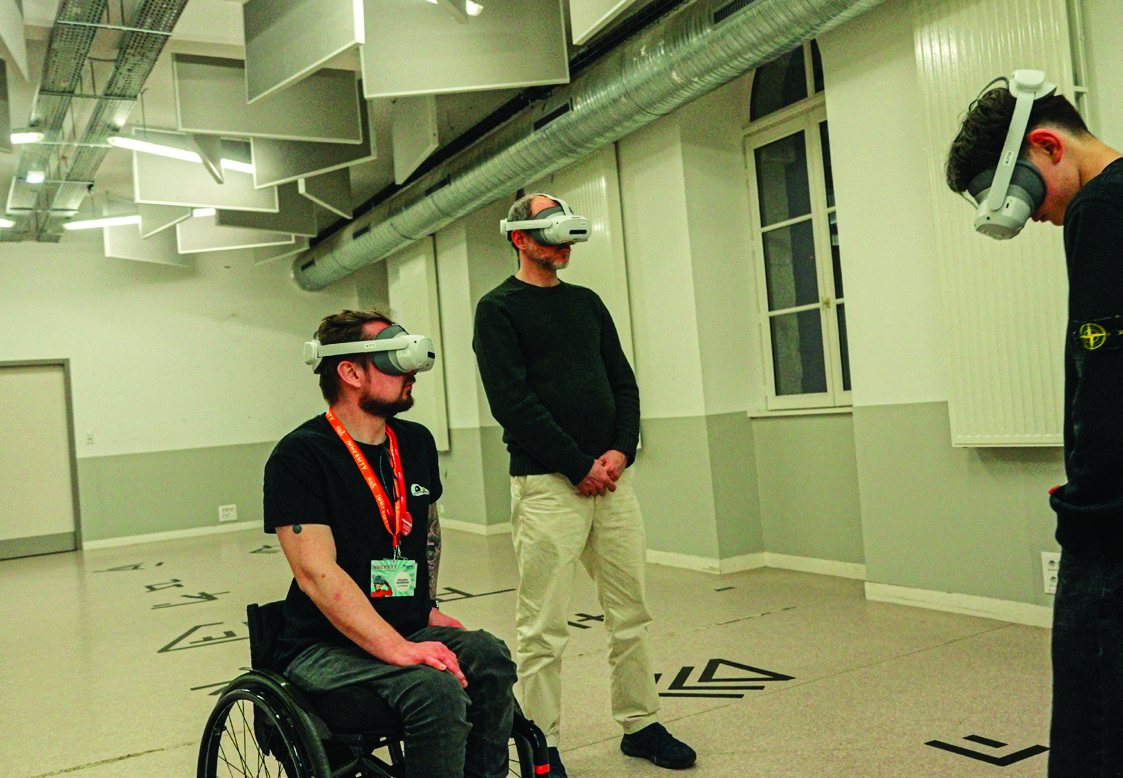
XR demonstrations, Immersity 2026
The discussion also stressed the growing importance of multidisciplinary approaches. The speakers described settings where engineering, cognitive sciences, biomechanics, physics, the humanities and artistic practices meet within a single project. This hybridisation meets a precise need: to better understand the quality of the experience lived by audiences and to develop more natural interactions in immersive environments.
References to measuring presence, assessing cognitive load, tracking visitor paths or analysing behaviour show that research does not only produce tools; it also helps to objectify what a work or a device produces in its users.
Finally, another key issue of the round table was valorisation. Open source, industrial transfer, patents, consulting, European or national calls for projects: the models discussed show that research-creation belongs to a composite economy in which results can circulate in many ways. Implicitly, the session confirmed that part of the future of the immersive industries lies in this ability to bring artists, engineers, researchers and producers into closer dialogue – not to illustrate technology, but to make it an active lever for creation.
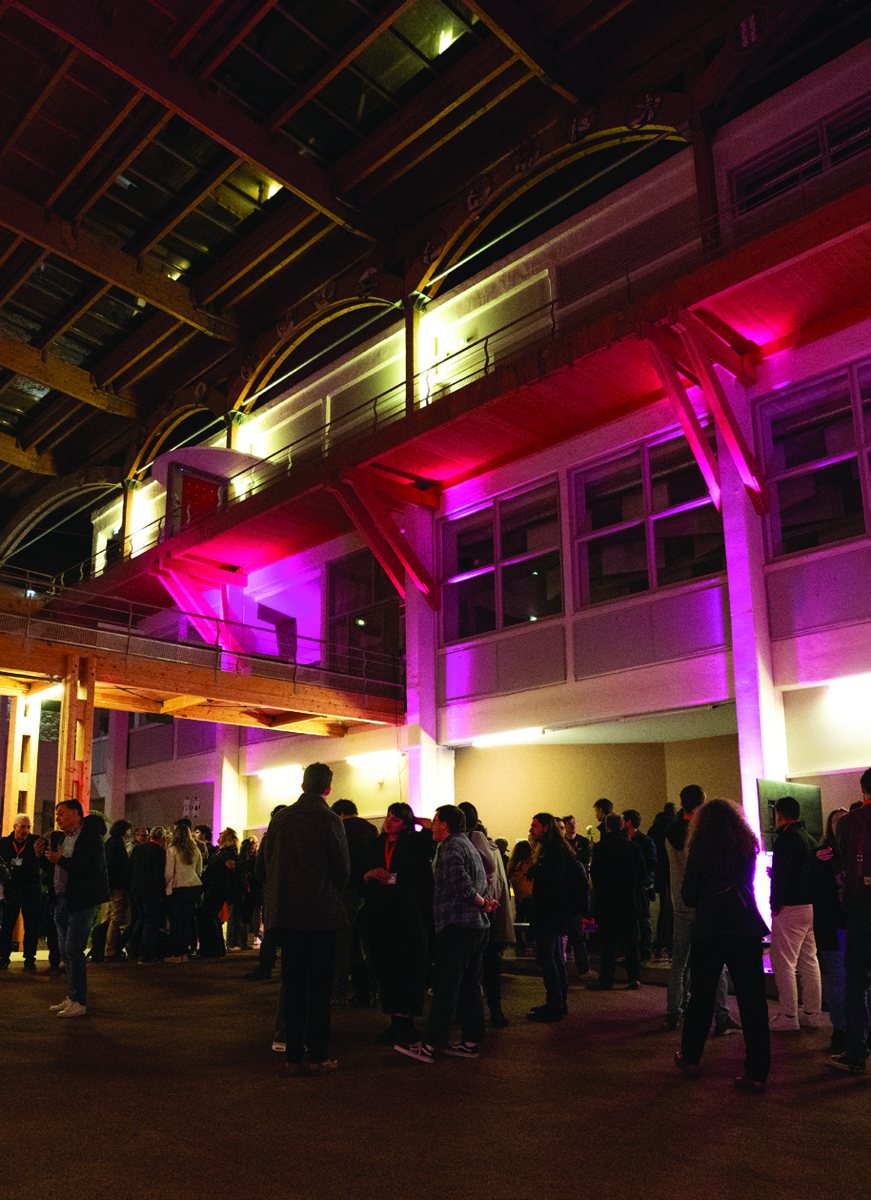
Immersity 2026, Angoulême
Round-table text translated from the Immersity 2026 synthesis (Magelis, in French). Photos: © Tasty.
[Speakers] Jean-Michaël Celerier, Jean-Pierre Gazeau, Xavier Maître
[Moderator] David Nahon
Synthesis (pdf, 14 MB, in French)
