Being at breath| NewImages Festival 2026
As part of the Résonances art-science project, the fifth theme explores the many dimensions of breath through a collaboration with the European project V|LF-Spiro3D and the NewImages Festival, which will take place from April 7 to 12 at the Cité des Sciences et de l’Industrie. For this occasion, exhibitions and a variety of talks, presentations, and workshops will be organized.
The program associated with Être au souffle promises to be rich and will unfold over four days - April 8, 9, 10, and 11 - bringing together numerous artists, scientists, and other practitioners working on breath and respiration. The art-science installations will remain on display until April 17.
See below for the detailed program and profiles of the speakers who will contribute to these discussions.
.png)
Being at breath| Cité des Sciences et de l'Industrie - Installations
Tout passe
[Concept] Ikse Maître
[3D real-time rendering] Matthieu Courgeon
[Drawings and 3D graphics] Sophie Larger, Gaële Misiak
[Music composition] Vincent Hulot
[Physiological signals] Adrien Duwat, Tim Schneider
[MRI data] Adrien Duwat
[Pulmonology] Hélène Salvator
[Physical medicine and rehabilitation] Nicolas Barizien
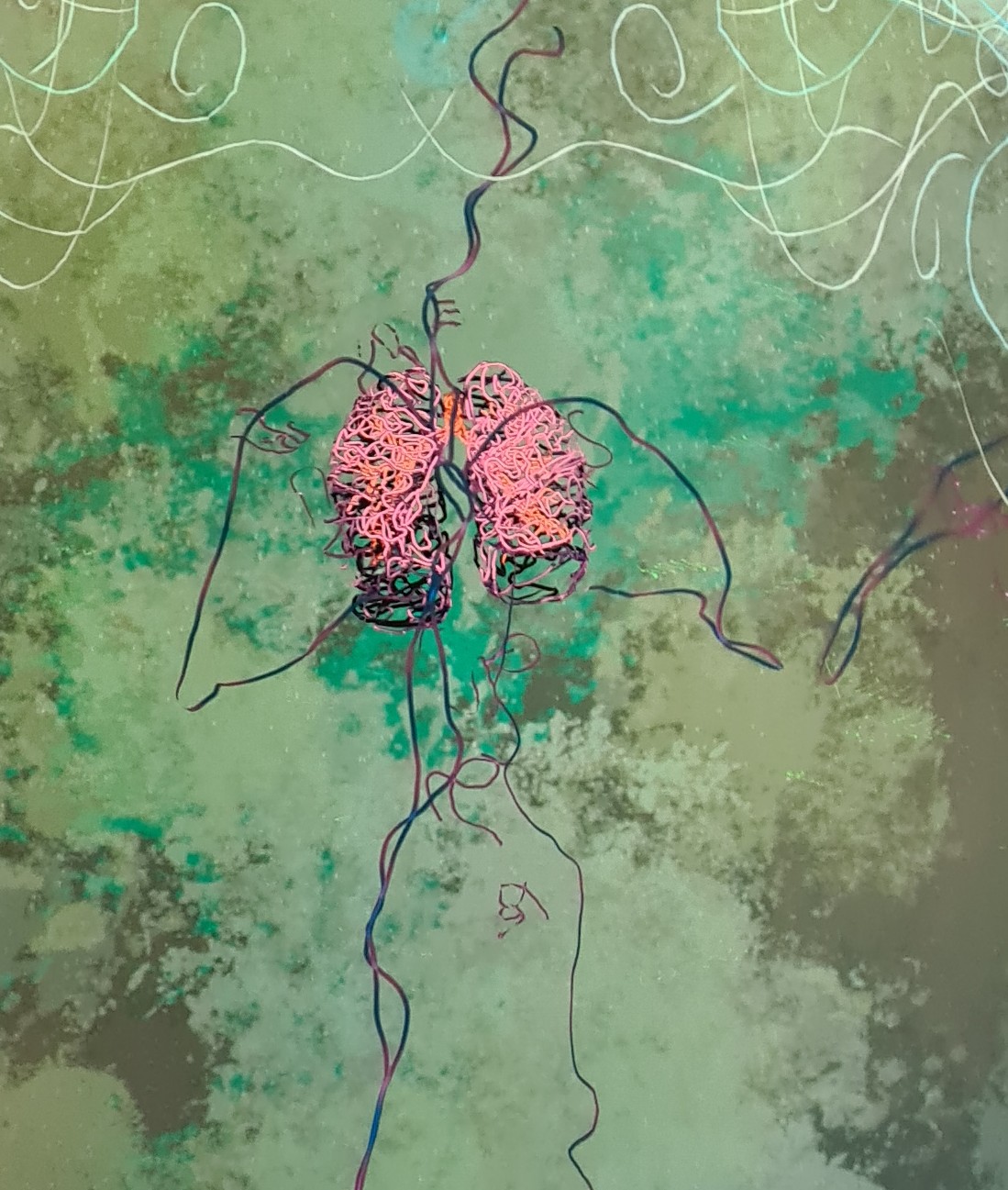
The first breath expels the liquid in which life developed to let the air go. In and out. Regularly and surprisingly along more than half a billion times in a human lifetime. Most of the time, most people do not pay attention to it. Breathing is autonomous and goes its way. Silently. The air goes in and out. Discretely. Tout passe is a behavioural work in which the three-dimensional reflection of visitors' features reveals their lungs breathing and air passing through their bodies. Tout passe is a mirror augmented by visitors’ respiratory rhythms, who appropriate them and could play with them. Tout Passe is a testing ground for the influence of this virtual self on our own behaviour by attaching itself directly to our physiology, where everything passes.
En savoir plus
The Sound of the air
[Concept] Ikse Maître
[Real-time graphic rendering] Matthieu Courgeon
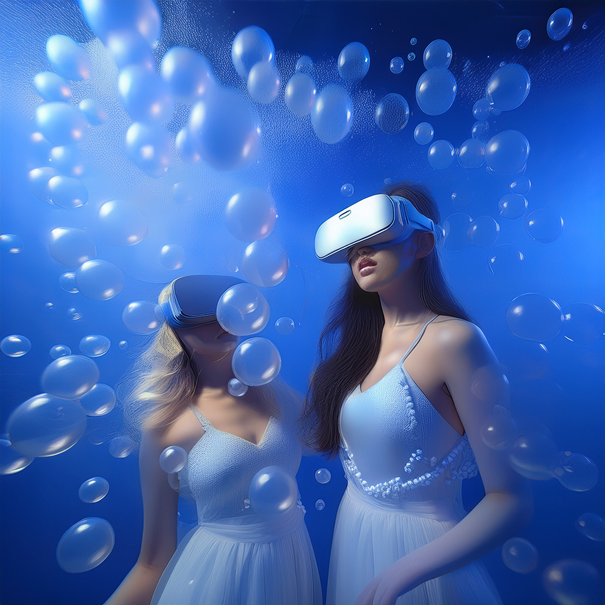
Without us really knowing it, without willing it, a couple of sextillion diatomic nitrogen, diatomic oxygen, argon, water and carbon dioxide rush into our air highways every few seconds, before dashing away from us a few seconds later.
We do not see it. Usually, we do not feel it. We barely pay attention to the life cycle of breathing. But as long as we live, we breathe.
Something like a billion times.
Breathing sounds smooth and soft. But then we sigh, we cough, we snore, we gurgle, we whistle, we squeak, we crackle, we rale, we rub, we sniff. Here, you will hear all that and you will see the air through you. The air around. Around the Earth. The air we all share. The air still goes in and out. As long as you live.
Perturbatio
[Concept] Charles Ménard-Wendling
[Concept & developpement] Tim Schneider

Perturbatio is a participatory installation designed to highlight the cumulative effects of individual actions on our environment. The public is invited to reflect on new scales and faces the difficult task of connecting seemingly mundane activities to their global consequences. Perturbatio aims to prompt reflection on our entanglement within the social, technical, and cultural systems that surround us. Etymologically, perturbatio refers to “the introduction of irregularities into a system.” Variations are a fundamental process of life that enables biological evolution and physical dynamics. However, beyond a certain threshold and scale, these perturbations jeopardize the fragile balance of life on Earth to which we belong. Like an imprint of our collective busyness, Perturbatio reflects the decentralized and collective nature of the ecological crisis.
En savoir plus
Being at breath| Cité des Sciences et de l'industrie - Program
Wednesday, April 8, 2026| Carrefour Numérique - Agora
16:30-17:00
Imag(en)ing the interior body
Jenny Slatman [Tilburg University]
The history of medical imaging techniques in art and visual culture. Exploration of the impact this has had and continues to have on the way individuals perceive their own body. By drawing on approaches from cultural studies, science and health, we analyse how these images influence interactions between patients and healthcare professionals, and contribute to a reconfiguration of contemporary bodily imaginaries.
17:00-17:30
Catching breath: (not so) medical images of the lungs
Irene Groenevelt [Tilburg University]
The lungs are the only organ over which we have such ready control. Therefore, medical images of the lungs are expected to promote self-recognition. However, different visual representations of the lungs, such as an X-ray of a pin-up model or a chronological sequence of MRI scans of the thorax, can produce contrasting experiences.
17:30-18:30
Tout passe: medical imaging, self-image
Sophie Larger [Ensad] | Ikse Maître [Université Paris-Saclay]
Art and science implicitly rely on fundamental human resources that are integrated into the creative process of discovery. By following the art-science research project around Tout Passe, we will follow the underlying surprises that such a project brings to its participants and the public. Based on shared serendipity, these surprises can lay the foundations for a rich and lasting scientific and artistic culture.
Thrusday, April 9, 2026 | Carrefour Numérique - Agora
10:30-12:00
Workshop: 3D real-time digital cuisine
Mâa Berriet
A few 3D real-time engines are available to create digital immersive and interactive installations. We will go through hardware tools and software recipes to qualify meals that creators can make out of them.
Friday, April 10 | Carrefour Numérique - Agora
10:00-11:30
Workshop: 3D real-time programming with AAASeed
Mâa Berriet
AAASeed is one of the few opensource 3D real-time engines are available to create digital immersive and interactive installations. We will go through the possibilities AAASeed offers.
Saturday, April 11, 2026| Carrefour Numérique - Agora
16:30-17:30
Réespiration: physiological abstraction, visualisation and concretisation of breathing
Samuel Bianchini [Ensad] | Thomas Similoski [APHP, Sorbonne Université]
Réespiration explores the interactions between humans and machines, based on respiratory empathy. This will allow a breathing abstraction to match the visitor's breathing rhythm. The obvious identification is removed and the interaction reduced to the essence of its physiological features;
17:30-18:30
Round table on education
Université Paris 8 | Ensad| Université Paris-Saclay
Speakers

Ikse Maître
Ikse|Xavier Maître est physicien et chercheur au CNRS au Laboratoire d'Imagerie Biomédicale Multimodale de Paris-Saclay (BioMaps, CEA, CNRS, Inserm, Université Paris-Saclay). Ses premières recherches se concentraient sur les fondements de la mécanique quantique ainsi que sur les mécanismes de l’intrication quantique et de la décohérence. Aujourd'hui, il combine la physique atomique et la physique médicale pour développer de nouveaux outils d'exploration du corps humain. Il coordonne le projet d'innovation européen V|LF-Spiro3D portant sur la spirométrie par résonance magnétique 3D.
Ikse Maître a initié le groupe science-art-société Le sas , au sein duquel il mène des recherches en art-science basées sur une interaction homme-machine sans contraintes. Il développe des expériences art-science et s'appuie sur des décalages de réalité pour tester nos relations avec le monde et engager le public. Il coordonne également le lot de travaux sur les technologies immersives pour le projet européen sur le patrimoine culturel Artcast4D et étudie les clés de l'immersion dans l'espace public au Forum des Images, à travers l'installation Ariadne’s Fibres.

Jenny Slatman
Jenny Slatman est professeure en philosophie de médicine à l'université de Tilburg, Pays-Bas. Elle a publié de nombreux articles sur le rôle du corps et de la corporalité dans l'art, l'expression et les pratiques médicales contemporaines. Parmi ses publications figurent une monographie française sur la signification de l'expression : L'expression au-delà de la représentation. Sur l'aisthêsis et l'esthétique chez Merleau-Ponty (Paris, 2003) ; une monographie en anglais Our Strange Body: Philosophical Reflections on Identity and Medical Interventions (Chicago, 2014) ; et une monographie néerlandaise sur Nouvelle corporalité – Nieuwe Lichamelijkheid (2023) pour laquelle elle a reçu le prix Hypatia. Elle a reçu plusieurs bourses de recherche de l'Organisation néerlandaise pour la recherche scientifique (NWO) : Bodily integrity in blemished bodies ; Mind the Body: Rethinking embodiment in healthcare. Depuis 2023, elle participe au consortium de recherche V|LF Spiro3D, dirigé par l'Université Paris-Saclay.

Mâa Berriet
Emmanuel Mâa Berriet est un ingénieur mécanique-électronicien et un pionnier du numérique, passionné de code et de 3D depuis les années 80. Né en 1961 à Alger, il a commencé à explorer la 3D sur des stations Silicon Graphic et a imaginé dès le début des solutions innovantes à faible coût, aboutissant à la création de AAASeed, un logiciel polyvalent de création immersive en temps réel. Artiste du numérique, il a su transformer des technologies comme la Kinect en expériences interactives, fusionnant art, technologie et sciences pour repousser les limites entre le réel et le virtuel.

Thomas Similowski
Thomas Similowski, 64 ans, est professeur de pneumologie à la faculté de santé de Sorbonne Université et praticien hospitalier à l’hôpital de la Pitié-Salpêtrière, à Paris. Il dirige l’UMRS 1158 Inserm–Sorbonne Université, intitulée « Neurophysiologie respiratoire expérimentale et clinique », exclusivement consacrée à l’étude des interactions entre la respiration et le système nerveux, entendu dans la plus large acception du terme. Dans ce contexte, il a mis en place une dynamique de recherche sociétale, au sein de laquelle se développe activement une interface art–science–médecine. L’œuvre Réespiration de Samuel Bianchini en est une illustration.

Samuel Bianchini
Samuel Bianchini est artiste et enseignant-chercheur (habilité à diriger des recherches) à l'École nationale supérieure des Arts Décoratifs (EnsAD) - Université Paris Sciences et Lettres (PSL), où il dirige le groupe de recherche Reflective Interaction d'EnsadLab (laboratoire de l'EnsAD) sur les dispositifs interactifs et où il a été également co-responsable, de 2017 à 2023, de la Chaire arts et sciences mise en place avec l'École polytechnique et la Fondation Daniel et Nina Carasso. Il est membre de l'Équipe d'accueil SACRe (Sciences Arts Création Recherche - EA 7410) de PSL et engagé sur le programme doctoral qui y est associé et pour lequel il dirige des doctorants en art et en design.. Il vit et travaille à Paris. Avec plus de 100 expositions collectives et 20 expositions personnelles, ses œuvres sont régulièrement exposées en Europe et à travers le monde.
En relation étroite avec sa pratique artistique, Samuel Bianchini a entrepris un travail théorique qui donne lieu à de fréquentes publications. Il a publié plus de 70 textes chez des éditeurs comme les Éditions du Centre Pompidou, les Éditions Jean-Michel Place, MIT Press, Analogues, Burozoïque, Hermes, Les presses du réel, Springer, Birkhäuser, etc. En tant qu'auteur, directeur ou co-directeur d'ouvrages, il a publié 7 livres dont, en co-direction avec Erik Verhagen, l'ouvrage collectif de référence Practicable. From Participation to Interaction in Contemporary Art, Éd. MIT Press, 2016. Il a également fondé la revue internationale visuelle multi-supports .able éditée par Actar (Barcelone, New York) et lancée en mars 2023, dont il est actuellement le rédacteur en chef.